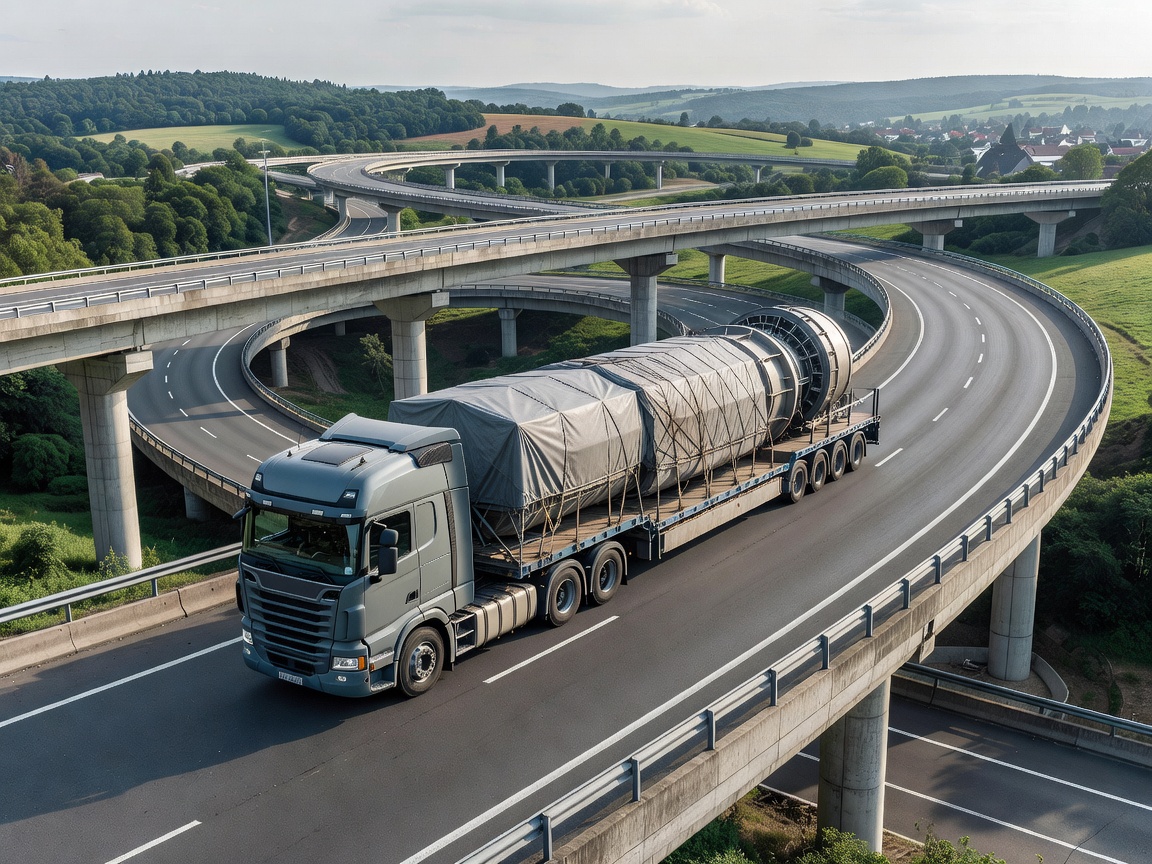
Same-Day Industrial Delivery: Route Physics & Limits
Same-day delivery in European manufacturing is governed by strict physical and regulatory realities. We analyze point-to-point road linehaul, air charter interfaces, and driver rest mandates without unverified promises.
A widespread misconception in plant operations is that any component can be moved anywhere in Europe within six hours simply by paying a premium. Reality demands understanding real-time motorway congestion, tachograph driving limits under EU Regulation (EC) No 561/2006, border crossing buffers, and localized industrial delivery gate restrictions.
Modality Selection: Road Dedicated vs. Air Courier
Choosing between a dedicated dual-driver van (hot-shot road transport) and an emergency air charter or On-Board Courier (OBC) is not merely a matter of linear distance. It is an intricate balance of terminal handover times versus cruise velocity.
| Logistics Modality | Optimal Distance Range | Key Operational Advantages | Critical Risk Factors |
|---|---|---|---|
| Dedicated Sprinter / Luton (Dual Crew) | 100 km – 900 km | Zero terminal processing delay; immediate direct gate-to-gate trajectory; live GPS tracking. | Motorway gridlock, alpine tunnel closures, weather constraints during winter crossings. |
| Air Charter (Light Turbo / Jet) | 600 km – 2,500 km | High cruising speed; bypasses terrestrial bottlenecks; rapid cross-regional hops. | Airport slot availability, ground handling handling buffers (90–120 mins), dangerous goods (ADR) limits. |
| On-Board Courier (Commercial Air) | 800 km – Intercontinental | Continuous hand-carry security; priority baggage handling through passenger terminals. | Strict airline baggage size and weight limits (typically < 32 kg per piece), security screening holds. |
Crucial Same-Day Planning Factors
When executing an unplanned transport run, dispatchers and plant maintenance leads must calculate these critical gating variables:
- Collection Cutoff Windows: The physical timestamp when the supplier's warehouse locks its gates. Many automated facilities cannot retrieve stock after 20:00 without designated emergency call-out personnel.
- Vehicle Payload Weight vs. Tachograph Exemption: Dedicated 3.5t vans can often operate under more flexible time constraints than heavy goods vehicles (HGVs), but strict payload weight limits must prevent safety violations.
- Receiving Plant Ingress Protocols: Does the destination plant have an active crane crew and fork operator on site past midnight, or will the vehicle be forced to wait outside the gate until 06:00 shift start?
- Geographic Transit Corridors: Cross-Rhine crossings, Brenner Pass flow control (Blockabfertigung), and Channel ferry schedules introduce deterministic delay points that must be factored into the estimated time of arrival (ETA).
Contingency Planning Workflow
Any reliable same-day logistics arrangement requires proactive route bifurcation:
Evaluation of primary corridor vs secondary regional bypasses for major construction zones.
Continuous live pinging of road corridor cameras and municipal heavy-traffic alerts.
Dual-driver cabin protocol to maintain continuous movement while adhering completely to legal driving hours.
Direct notification to receiver 60 minutes prior to arrival to verify dock crew readiness.
Next Stage in the Pipeline
Discover how origin hubs manage unexpected off-hours requests in Emergency Warehouse Coordination or investigate customs complexities in Cross-Border Parts Logistics.